Being charged with a federal crime in Laredo puts your freedom, your record, and your future in the hands of the U.S. government. If agents have contacted you, or a loved one is being held after an arrest at the border or a checkpoint, the pressure is real and the clock is already running.
Federal cases move differently than state cases. The prosecutors are Assistant U.S. Attorneys, the agents are federal, and the penalties are driven by the U.S. Sentencing Guidelines and mandatory minimums.
At Keith & Lorfing, we defend federal criminal cases in the Southern District of Texas, Laredo Division — and our team is led by a former federal prosecutor who knows how these cases are built.
If your case is connected to the Houston Division instead, our Houston federal criminal defense team can help you understand what comes next before you make your next move.
The federal cases we defend in Laredo
Laredo sits on one of the busiest stretches of the southern border, so the local federal docket is heavy with border-related crime. Our attorneys defend the charges that fill the Laredo Division courtroom, including:
- Illegal reentry after removal (8 U.S.C. § 1326): A felony charge for coming back into the U.S. after a prior removal or deportation. Prior convictions can sharply increase the sentence.
- Improper entry (8 U.S.C. § 1325): Often a misdemeanor on a first offense, but it can carry immigration consequences that outlast any sentence.
- Alien smuggling, harboring, and transporting (8 U.S.C. § 1324): Charges for moving or housing people who lack legal status — frequently filed after checkpoint or highway stops.
- Drug trafficking and possession with intent (21 U.S.C. §§ 841, 846): Distribution and conspiracy charges where the drug quantity often triggers a mandatory minimum.
- Drug importation (21 U.S.C. §§ 952 & 960): Bringing controlled substances across the border — a common port-of-entry and checkpoint charge.
- Firearms offenses and straw purchasing (18 U.S.C. §§ 922, 924(c), 933): Prohibited-person possession, false statements to buy a gun, guns used in furtherance of a drug crime, and firearms trafficking across the border.
- Money laundering: Charges tied to moving or hiding the proceeds of drug or smuggling operations, often filed alongside a trafficking count.
Many Laredo cases begin as a Homeland Security Investigations (HSI) matter before charges are ever filed. If HSI or ICE has reached out, read our ICE and HSI investigation defense page and contact our firm right away.
Federal immigration enforcement does not always follow the same rules as local police. Civil immigration enforcement can act under different authority than a criminal case, and agents sometimes carry an administrative warrant issued by ICE rather than a judicial warrant signed by a judge.
That difference matters: an administrative warrant generally does not let agents enter a private home without consent. You can ask to see a judicial warrant signed by a judge before letting anyone in, and you keep the right to stay silent and to speak with a lawyer.
Why federal charges in Laredo are so serious
Federal convictions carry consequences that state charges usually do not. A federal sentence is shaped by mandatory minimums and the advisory U.S. Sentencing Guidelines, not just a judge’s discretion.
In drug cases, the quantity of the controlled substance can trigger a mandatory minimum prison term — a floor the judge generally cannot go below without a legal exception. In firearms cases, a charge under 18 U.S.C. § 924(c) adds a mandatory term that runs consecutively, meaning it stacks on top of the underlying sentence.
The consequences reach past prison, too:
- Immigration: For a non-citizen, a conviction can mean removal, denial of reentry, or the loss of a path to lawful status. Under Padilla v. Kentucky, your lawyer must advise you on these consequences before you plead.
- Forfeiture: The government can move to seize cash, vehicles, and property it links to the alleged offense.
- Your record: A federal felony follows you through employment, licensing, and housing for years.
These cases don’t move fast on the surface, but underneath they’re moving the entire time. By the time it feels real to you, it’s usually much further along than you think. Waiting to get counsel only narrows your options.
To understand how prison terms are actually calculated, see our guide on how federal sentences are calculated. When you are ready, talk to a federal defense lawyer.
How we defend federal cases in the Laredo Division
A strong federal defense starts long before trial. The earlier we get involved, the more we can do to shape the outcome — sometimes before charges are even filed.
Our defense work in Laredo cases can include:
- Investigation-stage intervention: Stepping in during an HSI or DEA investigation to protect your rights and, when possible, influence the charging decision.
- Challenging the stop and the search: Many border and checkpoint cases turn on whether agents had legal grounds to stop, detain, or search. When they did not, we move to suppress the evidence.
- Attacking the government’s proof: We test the drug weight, the chain of custody, the lab analysis, and the reliability of any informant or co-defendant statement.
- Litigating the sentencing math: You don’t just plead — you litigate the math. We fight over Guidelines calculations, criminal-history scoring, and enhancements that drive up exposure.
- Pursuing every reduction: Where the facts allow, we pursue the safety valve (18 U.S.C. § 3553(f)), acceptance of responsibility, and — only when it serves you — cooperation.
- Trial when it’s the right call: When the government cannot prove its case, we are prepared to take it to a jury.
Two early mistakes cost people the most. The first is deleting or “cleaning up” records. Deleting emails or documents doesn’t fix the problem — it creates a new one. Obstruction is often easier to prove than the conduct behind it, and it destroys the leverage that preserving evidence through counsel can build.
The second is putting your head in the sand. The government builds the case quietly while you wait, so your options shrink before you ever react.
If you fear a federal investigation, a few steps protect you right away:
- Hire an experienced federal defense lawyer: Ideally before a subpoena or agents arrive, and not a general practitioner.
- Preserve everything: Never delete or alter records; evidence produced strategically through counsel can create leverage.
- Keep government contact controlled: Let us make first contact, and never rely on an agent’s informal assurances.
- Get a real read on timing: Early action keeps your options open.
Enforcement today also reaches individuals, not just companies. Coming forward before the government identifies an issue can preserve options; once it gets there first, you are reacting instead of deciding.
Every case is different, and results depend on the facts. To discuss your options, reach out to our team.
Why choose Keith & Lorfing
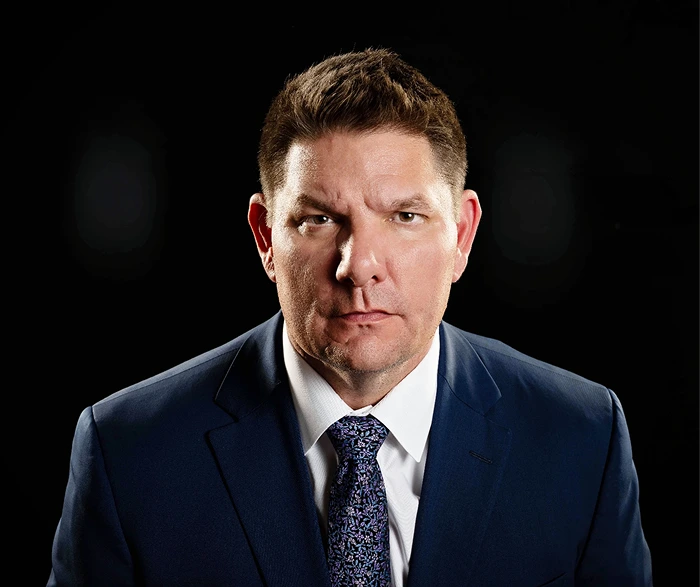
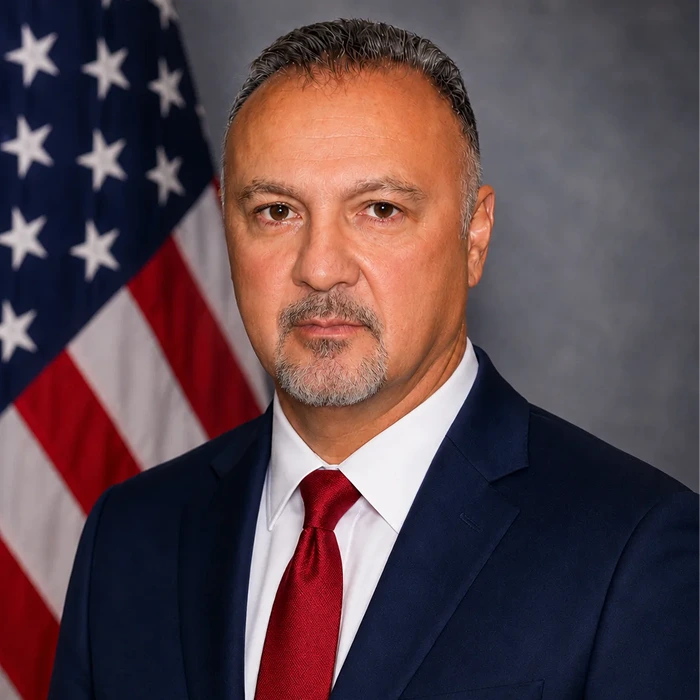
You want a lawyer who has seen federal cases from the inside. Our managing partner, Russell Lorfing, is a former Assistant U.S. Attorney who prosecuted federal cases before he began defending them, and he now serves as Co-Chair of the Federal Criminal Defense Committee for the Texas Criminal Defense Lawyers Association.
Our team brings depth that matters in federal court:
- Former federal prosecutor: Russell Lorfing knows how the government builds, charges, and negotiates these cases.
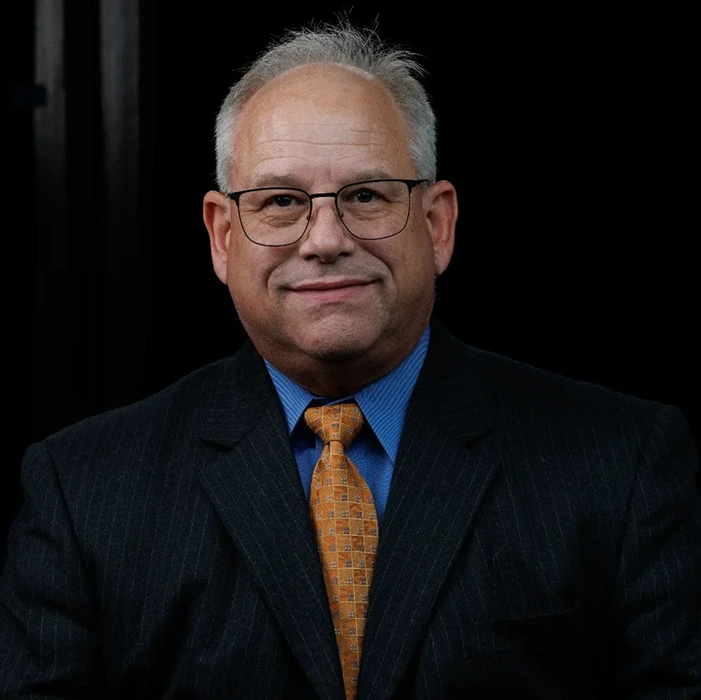
- A retired federal judge of counsel: The Hon. E. Scott Frost (Ret.) adds 30-plus years of federal courtroom perspective.
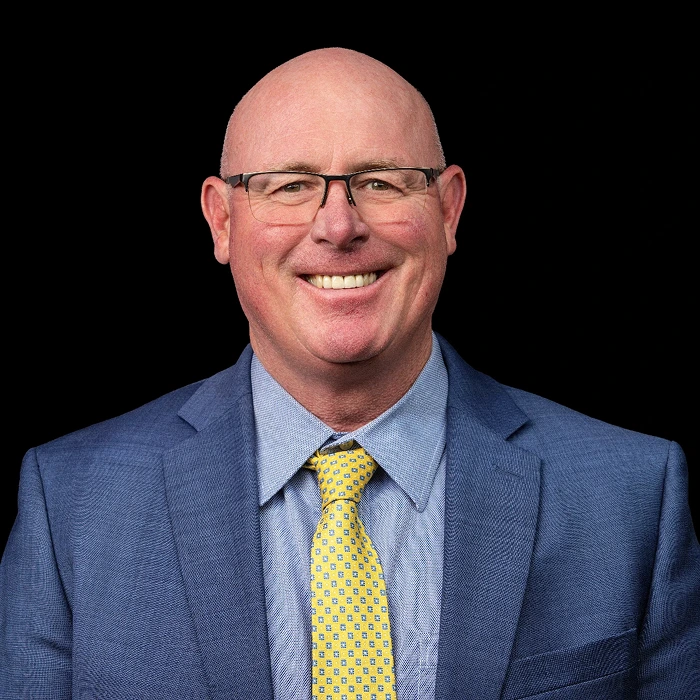
- A seasoned trial lawyer: Founding partner Trey Keith has spent 20-plus years defending the accused, with many “Not Guilty” verdicts.
- Admitted where your case is: Our team is drawn from the highest levels of the federal system and represents clients in federal courts across the country. We are admitted in the Southern, Northern, and Western Districts of Texas, the U.S. Court of Appeals for the Fifth Circuit, and the U.S. Supreme Court — including federal matters in Laredo and nearby South Texas courts. For cases in the Rio Grande Valley, our McAllen federal criminal defense team can step in with the same federal-court experience. We also defend federal cases in Southeast Texas through our Beaumont federal criminal defense team.
Past results do not guarantee any particular outcome in your case. What we offer is experience, preparation, and a defense built for federal court. Schedule a confidential consultation to talk it through.
What to expect in federal court in Laredo
Federal cases in the Laredo Division are handled at the George P. Kazen Federal Building and United States Courthouse, 1300 Victoria St., Laredo, TX 78040. Knowing the path ahead can make a stressful process feel less overwhelming.
Here is the general sequence in a federal case:
- Investigation: Agents from HSI, DEA, ATF, or the FBI gather evidence, sometimes for months before you know it.
- Arrest or charge: A case begins by complaint, information, or grand jury indictment.
- Initial appearance and detention hearing: Early on, the court decides whether you are released on conditions or held. Detention is common in border cases, so having counsel here matters.
- Pretrial motions: This is where we challenge stops, searches, and the government’s evidence.
- Resolution: The case ends in a negotiated plea, a dismissal, or a trial.
- Sentencing: If there is a conviction, the judge sets the sentence using the Guidelines and any mandatory minimums. See what to expect at a federal sentencing hearing.
We also defend federal cases in the Houston Division. If your case is filed there, our Houston federal criminal defense team can help you understand the process, the risks, and the defense options available.
Talk to a Laredo federal defense lawyer
A federal charge is serious, but it is not the end of the story. The right defense, started early, can change what happens next.
Our team is led by a former federal prosecutor and includes a retired federal judge — the kind of experience these cases demand. We will listen, explain your options in plain language, and build a defense around the facts of your case.
Contact our firm to schedule a confidential consultation about your federal case in the Laredo Division.
Frequently asked questions
Is my case in state or federal court in Laredo?
It depends on who investigated and charged you. Cases brought by federal agencies like HSI, DEA, ATF, or the FBI, or that involve federal statutes, go to federal court in the Laredo Division rather than Webb County state court.
Where is federal court held in Laredo?
At the George P. Kazen Federal Building and United States Courthouse, 1300 Victoria St., Laredo, TX 78040, which serves the Laredo Division of the Southern District of Texas.
What are the most common federal charges in the Laredo Division?
Because Laredo is a high-volume border district, the docket is heavy with immigration offenses (§§ 1325, 1326, 1324), drug trafficking and importation (§§ 841, 846, 952/960), firearms and straw-purchasing charges (§§ 922, 924(c), 933), and money laundering.
Will I get bond in a federal case?
Not always. Federal judges can order a defendant detained before trial, and detention is common in border and drug cases. We fight for release on conditions whenever the facts support it.
I’m not a U.S. citizen — how does a federal conviction affect me?
It can lead to removal, denial of reentry, or loss of a path to lawful status. Under Padilla v. Kentucky, we must advise you on the immigration consequences before you decide on any plea.
What is a mandatory minimum, and can it be avoided?
It is a minimum prison term set by statute, often triggered by drug quantity or a firearm charge. Depending on the facts, relief may be possible through the safety valve (18 U.S.C. § 3553(f)) or other legal exceptions.
Federal agents want to talk to me — should I?
Talk to a lawyer first. What you say can be used to build the case against you. See our page on what to do when federal agents want to talk.
Can deleting records make things worse?
Yes. Deleting or altering records can create a separate obstruction charge that is often easier for the government to prove than the underlying conduct. Preserve everything, and let your lawyer decide what gets produced and when.
Do you have to be in Laredo to represent me?
No. Our firm is admitted in the Southern District of Texas and represents clients in the Laredo Division. Federal practice is portable nationwide, so we defend federal cases wherever they are filed — where your case sits, not where our offices do, is what matters.