A letter from HHS-OIG, a subpoena for your billing records, or a knock from FBI agents can put your license, your practice, and your freedom at risk at the same time. If you are a physician, pharmacist, or medical business owner in Houston, a federal healthcare fraud case is one of the most serious things you will ever face.
You do not have to face it alone, and you should not try to explain your way out of it. What you say and do in the first days can shape the entire case.
Our firm, Keith & Lorfing, defends federal healthcare fraud cases in the Southern District of Texas, Houston Division. Our team is led by a former federal prosecutor who brings firsthand insight into how federal cases are investigated and prosecuted.
If the government has contacted you, or you believe they may soon, speak with a Federal Criminal Defense Lawyer in Houston before answering questions, handing over records, or making any statement to investigators.
The healthcare fraud cases we defend in Houston
Federal healthcare fraud covers a wide range of billing, prescribing, and referral conduct. Most Houston cases fall into one or more of these areas:
- Health care fraud — 18 U.S.C. § 1347: The main federal charge for schemes to defraud Medicare, Medicaid, TRICARE, or private insurers through false or inflated billing.
- False statements in health care — 18 U.S.C. § 1035: Lying or leaving out key facts on claims, records, or in an investigation tied to a health care benefit program.
- Anti-Kickback Statute — 42 U.S.C. § 1320a-7b: Paying or receiving anything of value for patient referrals or for ordering services covered by a federal program.
- Stark Law — 42 U.S.C. § 1395nn: Improper physician self-referral to entities the physician or a family member has a financial stake in.
- False Claims Act — 31 U.S.C. § 3729: The civil law behind many cases, often started by a whistleblower (qui tam), that can run alongside a criminal case.
- Controlled-substance and prescribing cases: Overprescribing or “pill mill” allegations under the Controlled Substances Act, frequently paired with billing fraud.
These cases often overlap. A single audit can grow into billing fraud, kickback, and prescribing allegations at once. We defend the whole picture, not just one charge.
Learn more about our national practice in healthcare fraud defense, Medicare fraud defense, and Medicaid fraud defense.
Why federal healthcare fraud charges are so serious
A conviction under § 1347 can carry years in federal prison, and more if patient harm is alleged. But prison is only part of what is on the line.
Healthcare fraud cases threaten your career and your finances at the same time. The exposure usually runs on three tracks that can move together:
- Criminal: Prison, fines, and forfeiture of money and property tied to the alleged scheme.
- Civil: False Claims Act liability, which can mean treble (triple) damages plus per-claim penalties.
- Administrative: Exclusion from Medicare and Medicaid by HHS-OIG, plus action against your medical, nursing, or pharmacy license.
The sentencing math is the real fight
In federal fraud cases, the alleged loss amount is the engine of the sentence. Under U.S. Sentencing Guidelines §2B1.1, the offense level climbs as the loss crosses set dollar thresholds — so the fight over the loss number often decides the sentence before the judge rules.
The government does not have to prove money was actually lost. It can argue intended loss, so prosecutors push the most aggressive figure they can. Challenging that number is usually the trial within the case.
Most cases are won on loss in three places:
- Credits against loss: Legitimate services or value actually provided should come off the number.
- Double-counting: The same dollars are sometimes counted across multiple victims.
- Speculative intended loss: Amounts that were never realistic should not drive the range.
The Guidelines also stack extra levels for specific-offense-characteristics — a menu of upgrades you never ask for. A case can quietly climb from a low base level to a much higher one. “Sophisticated means,” for example, is applied broadly (in the Fifth Circuit, using multiple accounts to mask the source of funds can qualify), but it can be fought as ordinary business conduct or as a label out of proportion to the facts. Victim enhancements add levels at 10 or more victims and again at larger counts, so we scrub the government’s victim list for duplicates, already-reimbursed patients, and losses actually caused by something else.
Hypothetical example:
A $300,000 fraud might start near base offense level 7; the loss adds roughly 12 levels, and an enhancement like “sophisticated means” can add more — pushing the range up sharply. Challenging those enhancements and the loss figure can pull it back down. This is only an illustration, not a prediction of any result.
At sentencing, you don’t just plead — you litigate the math. Every dollar we call back from that spreadsheet is time we give back to your life. You can read more about how federal sentences are calculated.
How healthcare fraud investigations start in Houston
Houston is one of the country’s most active healthcare fraud enforcement zones. It was one of the original cities for the DOJ Medicare Fraud Strike Force, and federal cases here are prosecuted in the U.S. District Court for the Southern District of Texas, Houston Division, at the Bob Casey U.S. Courthouse on Rusk Street.
Many providers assume an investigation needs a disgruntled employee or a patient complaint. That is no longer true.
Today most investigations start with data. The government compares your billing to other providers and flags the outliers. You no longer need an angry employee to trigger an investigation — billing differently from your peers can be enough.
The analytics are more specific than most providers realize. If your utilization, modifiers, or reimbursement per patient looks off, you may already be on a list.
The billing patterns that tend to stand out are also the ones prosecutors know how to charge:
- Upcoding: Billing a higher-paying code than the service supports, which shows up as a lopsided mix of high-level visits.
- Medically unnecessary services: Tests, procedures, or equipment the data suggests were not needed, or were ordered at a rate far above peers.
- Billing that drifts more aggressive over time: Coding that slowly climbs quarter over quarter is one of the easiest patterns for an algorithm to see. You do not want to be the outlier.
Investigations often involve several agencies at once — DOJ prosecutors, HHS-OIG, the FBI, and the DEA for prescribing cases. The first sign is often a records subpoena, a Civil Investigative Demand, an audit, or agents showing up unannounced. To see how billing data turns into a case, read how healthcare billing data drives a federal fraud investigation.
If you wait until the government has built its file, you’re reacting instead of deciding. Reach out to our team as soon as you sense something is wrong.
The two costliest early mistakes are avoidable. Both make a hard case worse:
- Deleting or “cleaning up” records. This can create a fresh obstruction charge that is often easier to prove than the underlying billing. Deleting emails or documents doesn’t fix the problem — it creates a new one. Preserved evidence, produced strategically through counsel, is leverage.
- Putting your head in the sand. Ignoring the signs while the government quietly builds the case only shrinks your options before you ever react.
How we defend healthcare fraud cases
There is no single playbook. The right defense depends on the facts of your case, the stage it is in, and what the government thinks it can prove. Our approach usually includes several of these:
- Early, investigation-stage intervention: We step in before charges when possible, respond to subpoenas and CIDs the right way, and try to shape the outcome while the government is still deciding.
- Attacking intent: Healthcare fraud requires a knowing, willful scheme — not an honest mistake. We separate billing errors and gray-area coding from actual fraud.
- Challenging the loss math: We test how the government calculated loss, including extrapolation from small samples, because that number drives any sentence.
- Suppressing bad evidence: We move to exclude evidence gathered through overbroad searches or improper interviews.
- Using experts: Coding, billing, and medical-necessity experts can dismantle the theory that a claim was false at all.
- Negotiation and trial: We negotiate from strength when resolution serves you, and we are prepared to try the case when it does not.
We also help organizations act before a problem becomes a case. That can mean a discreet internal review to assess exposure while preserving privilege, tightening billing controls, and engaging strategically with agencies like DOJ, the FBI, IRS, HHS-OIG, and the U.S. Attorney’s Office when concerns surface. Regular internal audits catch most billing drift long before an algorithm does.
For prescribing and pharmacy audits, see our DEA audit defense practice. When a whistleblower is behind the case, our False Claims Act and qui tam defense team defends the civil side alongside the criminal exposure.
Why choose Keith & Lorfing
Healthcare fraud cases are won by lawyers who understand how the government thinks. Our team has sat on the other side of the table.
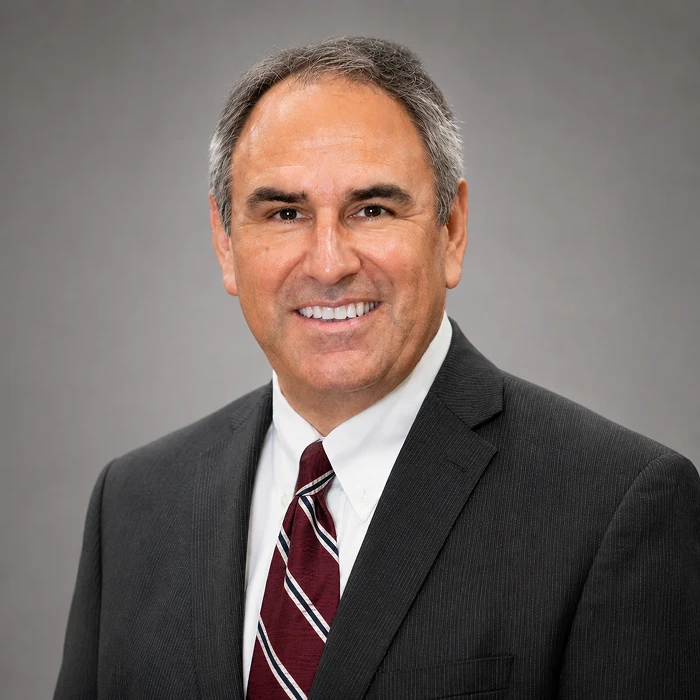
- Russell Lorfing, our managing partner, is a former Assistant U.S. Attorney and multi-award-winning trial lawyer. In 2024 he was selected as Co-Chair of the Federal Criminal Defense Committee for the Texas Criminal Defense Lawyers Association, and he is admitted to practice in the Southern District of Texas.
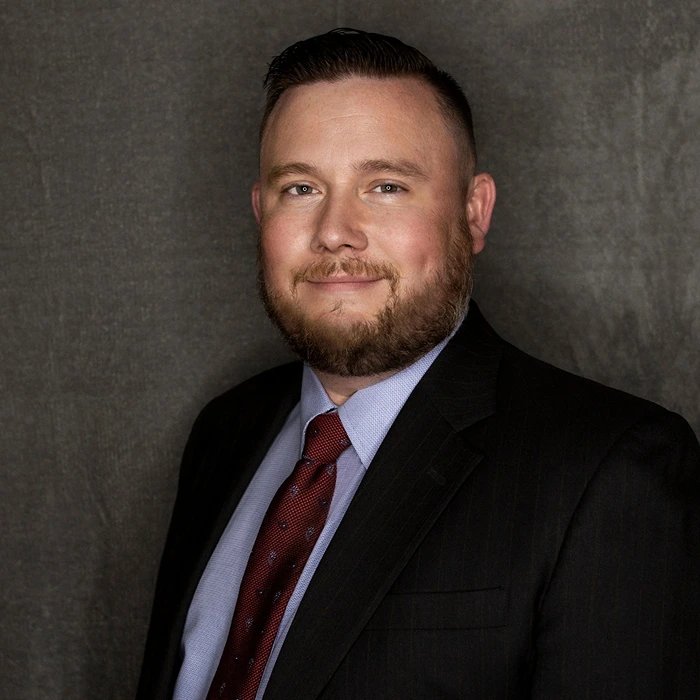
- Trey Keith, our founding partner, has more than 20 years defending the accused and many “Not Guilty” verdicts.
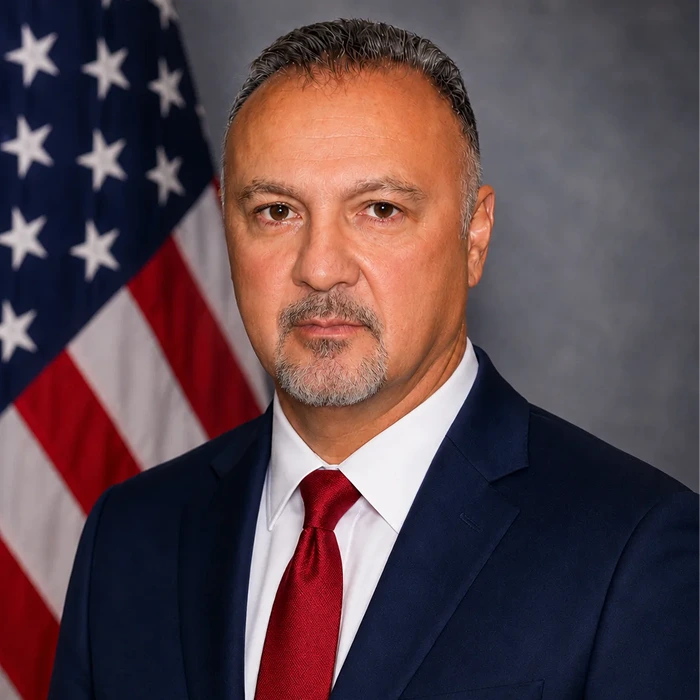
- Hon. E. Scott Frost (Ret.), of counsel, is a retired federal judge with more than 30 years of federal courtroom experience.
- Our broader team includes former federal prosecutors and defenders, former FBI agents and IRS criminal investigators, and a retired federal judge.
Federal law applies the same way in every district, and we represent clients in federal courts across the country, including the Houston and Laredo divisions of the Southern District of Texas.
Our team is drawn from the highest levels of the federal system, and we are admitted in the Southern, Northern, and Western Districts of Texas, the U.S. Court of Appeals for the Fifth Circuit, and the U.S. Supreme Court. Past results depend on the facts of each case and do not guarantee any particular outcome.
You can also learn more about our broader Houston federal criminal defense practice and how we defend serious cases in the Southern District of Texas.
What to expect in a federal healthcare fraud case
These cases rarely move fast on the surface, which can be dangerously misleading. These cases don’t move fast on the surface, but underneath they’re moving the entire time — by the time it feels real, it’s usually much further along than you think.
Here is the general path a case can take:
- Investigation: Subpoenas, CIDs, audits, and agent interviews, often for months before any charge.
- Target or subject status: The government signals where you stand; counsel can sometimes present a defense before charges are filed.
- Charging decision: Indictment, an information tied to a plea, a civil FCA suit, or no action.
- Litigation: Motions, discovery, and either a negotiated resolution or trial.
- Sentencing: If there is a conviction, the loss amount and Guidelines factors are argued here.
The earlier we get involved, the more options you tend to have. Talk to a federal defense lawyer about where your case stands.
Talk to a Houston healthcare fraud defense lawyer
A federal healthcare fraud case can threaten everything you have built. The sooner you have experienced counsel, the more you can do to protect your license, your practice, and your freedom.
Our team includes a former federal prosecutor and a retired federal judge, and we defend these cases across the Southern District of Texas.
Contact our firm to schedule a confidential consultation and take back control of what happens next.
Visit Our Houston Office
5005 Riverway Dr #250, Houston, TX 77056
Frequently Asked Questions
Is a healthcare fraud investigation criminal or civil?
It can be either or both. The same conduct can lead to a criminal charge, a civil False Claims Act suit, and an administrative exclusion — sometimes at the same time. We defend all three tracks together.
I made billing mistakes — can I still be charged with fraud?
Honest errors are not fraud. The government must prove you acted knowingly and willfully, not that you made coding or paperwork mistakes. Separating error from intent is often the heart of the defense.
What does the government have to prove for healthcare fraud?
Under 18 U.S.C. § 1347, it must prove a knowing and willful scheme to defraud a health care benefit program, or to obtain money from one by false pretenses. Intent is the key element and often the weakest part of the government’s case.
What are the penalties for federal healthcare fraud?
Depending on the facts, penalties can include federal prison, heavy fines, forfeiture, treble damages under the False Claims Act, and exclusion from Medicare and Medicaid. Loss of your professional license is also possible.
The FBI or HHS-OIG contacted me — what should I do first?
Be polite, do not answer questions, and do not hand over documents or delete anything. Then call a lawyer. See our guide on what to do when federal agents want to talk.
What is a Civil Investigative Demand (CID)?
A CID is a formal demand for documents, records, or testimony, usually tied to a False Claims Act inquiry. How you respond matters, because it can shape whether the case turns criminal.
Can deleting records make things worse?
Yes. Deleting or altering records can add an obstruction charge that is often easier to prove than the underlying billing conduct, and it destroys the leverage that preserving evidence creates. Never delete anything; let counsel manage what is produced and when.
How long do healthcare fraud investigations take?
Often months to years. A quiet stretch does not mean the case is over — it usually means the government is still building it.
Should I hire a lawyer before I’m charged?
Yes, whenever possible. Early intervention is when a defense lawyer can do the most to shape the outcome, and sometimes to prevent charges.